Wood Newel Post Types
Staircase systems commonly use five main types of newel posts: Standard Newels, Landing Newels, Pin Top Newels, Stabilizer Newels, and Box Newels. Each style serves a specific purpose in supporting the handrail system while adding decorative detail and structural stability to the staircase design.
 | | | | |  | | | | |  | | | | |  | | | | |  | Standard
Newel | | | | | Landing
Newel | | | | | Pin Top
Newel | | | | | Stabilizer
Newel | | | | | Box
Newel |
🔹 1. Standard Newel PostsDesign: A general category that includes various shapes and styles, but typically refers to solid, turned or square posts. Size: Usually around 3" to 4-1/2" square. Top: May be square, rounded, or feature decorative finials. Installation: Installed directly onto the floor or stair tread; sometimes used in combination with a separate post cap. Use: Common at the bottom, top, or landings of staircases. Styles: Can be plain square, fluted, reeded, or turned (with decorative details).
✅ Best for: Most residential staircases; a versatile, classic option. 🔹 Landing Newel Post📌 What It Is:A landing newel post is a type of newel post installed at a stair landing, which is the flat area between two flights of stairs or at a turn in the staircase. 🏗️ Purpose:🔄 Where It's Used:At landings, corners, or turns in the staircase. Often positioned where the handrail changes angle or direction horizontally.
🛠️ Design:Looks similar to a standard newel post (turned, square, or box). Can match bottom and top newels for design consistency.
✅ Best for: Multi-flight staircases with intermediate landings. 🔹 2. Pin Top Newel PostsDesign: A type of standard newel that has a thin dowel-like extension (the "pin") at the top. Top: The pin is designed to allow a handrail to be fitted directly over it. Function: The pin is inserted into a corresponding hole in the handrail for a clean, continuous look. Installation: Often secured using hardware or epoxy for a strong connection.
✅ Best for: Sleek transitions between newel post and handrail; ideal when you want the handrail to sit on top of the post with minimal interruption. 🔹 Stabilizer Newel Post (a.k.a. Intermediate Newel Post)📌 What It Is:A stabilizer newel post is a non-terminal post placed midway along a long railing run to provide extra stability—not at a landing or stair end. 🏗️ Purpose:Reinforces the handrail and balustrade system over long spans. Prevents the handrail from wobbling or flexing. Adds structural support but typically does not change the direction of the handrail.
📍 Where It's Used:Midway along long balconies, walkways, or stair runs. Especially useful on open railing sections without walls for support.
🛠️ Design:✅ Best for: Long stretches of railing or balconies needing extra support between main posts.
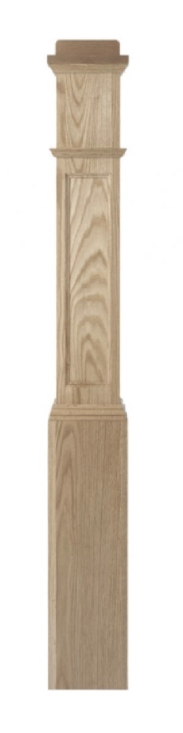
🔹 3. Box Newel PostsDesign: Large, hollow square posts, often with decorative moldings or recessed panels. Size: Typically larger and more substantial (5" to 7" square or more). Construction: Hollow box construction (sometimes solid), often made with veneer or hardwood. Top: Flat or topped with a decorative cap. Style: More architectural and modern or craftsman in appearance.
✅ Best for: Grand staircases, craftsman-style homes, or when a bold, statement post is desired.
|